
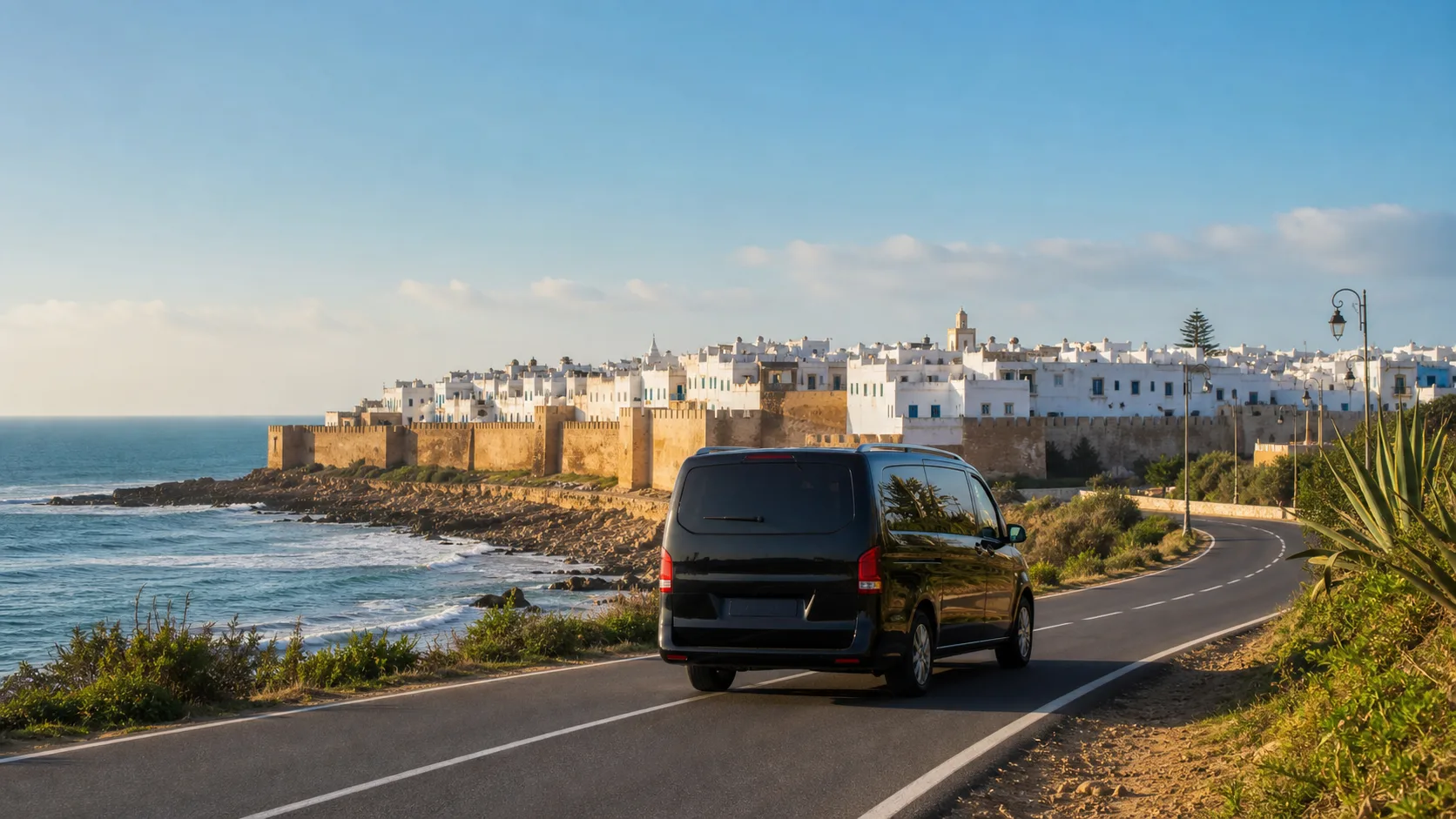
Plan Marrakech to Asilah with worthwhile stops, fresh seafood ideas, and practical advice for buying local art, crafts and food products.
Marrakech and Asilah sit at opposite ends of a rewarding cross-country drive: the red city and Haouz plain in the south, then Morocco's Atlantic corridor, and finally a whitewashed medina behind honey-coloured ramparts. The road journey is about 527 kilometres and takes a little over five hours without meaningful stops. In practice, allow six to seven hours for a direct private transfer, or a full day if you want to pause in Rabat, Larache or Moulay Bousselham.
Marrakech to Asilah at a glance
| Route detail | Practical answer |
|---|---|
| Main route | Marrakech → Settat → Casablanca bypass → Rabat → Kenitra → Larache → Asilah |
| Road distance | About 527 km |
| Direct driving time | About 5–5.5 hours in light traffic |
| Realistic transfer | 6–7 hours with comfort breaks and traffic |
| Scenic travel day | 8–10 hours with one substantial stop and lunch |
| Best plan | Leave early and spend at least one night in Asilah |
Most of the journey follows motorways, but traffic around Casablanca and Rabat can change the schedule. Do not try to combine every stop below on one transfer day. Choose one main visit—usually Rabat or Larache—and treat the others as alternatives. A driver can also keep luggage in the vehicle while you stop, but passports, cash and electronics should stay with you.
The best stops between Marrakech and Asilah
1. Settat: the efficient breakfast stop
Settat is the sensible first pause after roughly an hour and a half on the road. A motorway service area is fastest; going into town is only worthwhile if you want a longer breakfast. Msemen, eggs, bread, olive oil and mint tea make an easy start, while a coffee and sealed snacks keep a direct transfer moving.
2. Rabat: history, lunch and trusted craft shopping
Rabat is the strongest cultural stop on the route. For a focused visit, walk through the blue-and-white Kasbah of the Udayas and look over the Bou Regreg and Atlantic. Morocco's tourism office also highlights Hassan Tower and the Mausoleum of Mohammed V, but adding both landmarks and the medina turns a quick break into a half-day visit.
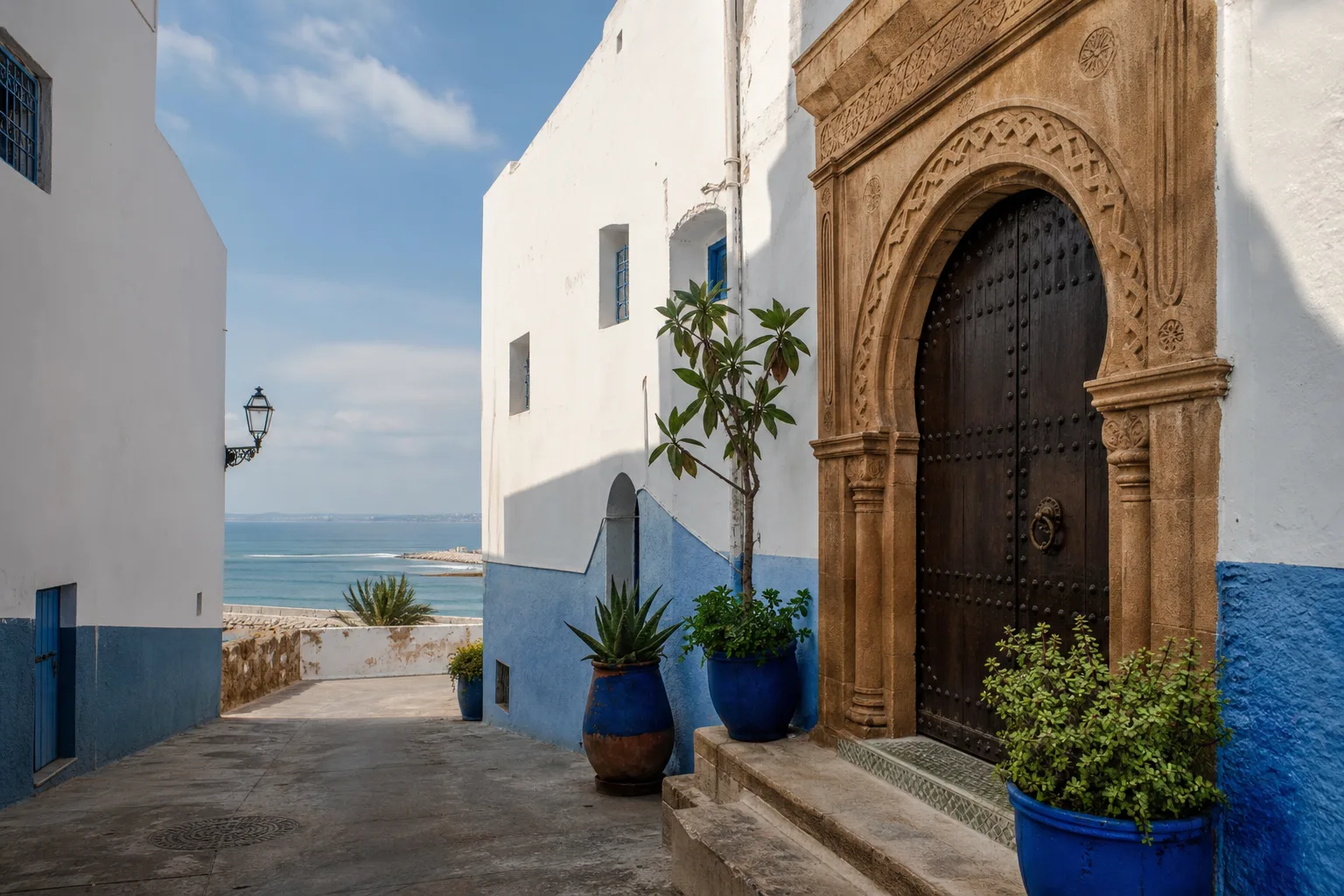
For lunch, choose a busy restaurant around the medina or Bou Regreg and order what is fresh that day: grilled fish, brochettes, salads or a tagine. For souvenirs, Rue des Consuls is known for silver jewellery and Rabati carpets. If pottery is your priority and time allows, the Oulja craft complex in Salé brings together ceramic, basketry and wrought-iron workshops.
3. Moulay Bousselham: an optional lagoon and seafood detour
Moulay Bousselham is for travellers who prefer nature to city monuments. The coastal village sits beside the Merja Zerga lagoon and makes a relaxed seafood stop, but the turn off the motorway and the visit add meaningful time. Choose it instead of Rabat, not after a long Rabat tour. Boat conditions and wildlife vary by season, so arrange any lagoon outing locally and avoid disturbing birds.
4. Larache and Lixus: Atlantic lunch with an ancient-site option
Larache is close enough to Asilah for a late lunch or a final cultural stop. The official Lixus archaeological site lies above the Loukkos River near its mouth and preserves layers from Phoenician, Punic, Mauretanian, Roman and Islamic periods. Check the current ticket hours before travelling; the culture ministry presently lists visits from 9:00 to 17:00.
Around Larache's port and centre, look for a restaurant with a visible local crowd and a short fish menu. Ask for the day's catch and confirm the price before ordering. Grilled sardines, sole, calamari or a fish tagine are better choices than insisting on a species that may not be fresh that day.
What to see when you arrive in Asilah
Enter the compact medina through its gates and walk without rushing. White walls, blue and green details, painted murals and small galleries give Asilah a distinctive coastal character. Continue to the ramparts and the Krikia viewpoint for Atlantic light near sunset, then explore the lanes again when the day visitors have left.
- The medina lanes and changing wall murals for a slow, mostly car-free walk.
- The Portuguese-era ramparts and sea-facing Krikia viewpoint around golden hour.
- Small galleries and studios, especially when exhibitions or the cultural season are active.
- Paradise Beach only if you have another day and suitable transport; it is not a quick medina walk.
Where and what to eat
Keep the motorway meal simple if you want time in Asilah. For the memorable meal, wait until Larache or Asilah and choose seafood close to the source. A clean, busy restaurant with a concise menu is often more reliable than a place displaying a long catalogue of unavailable dishes.
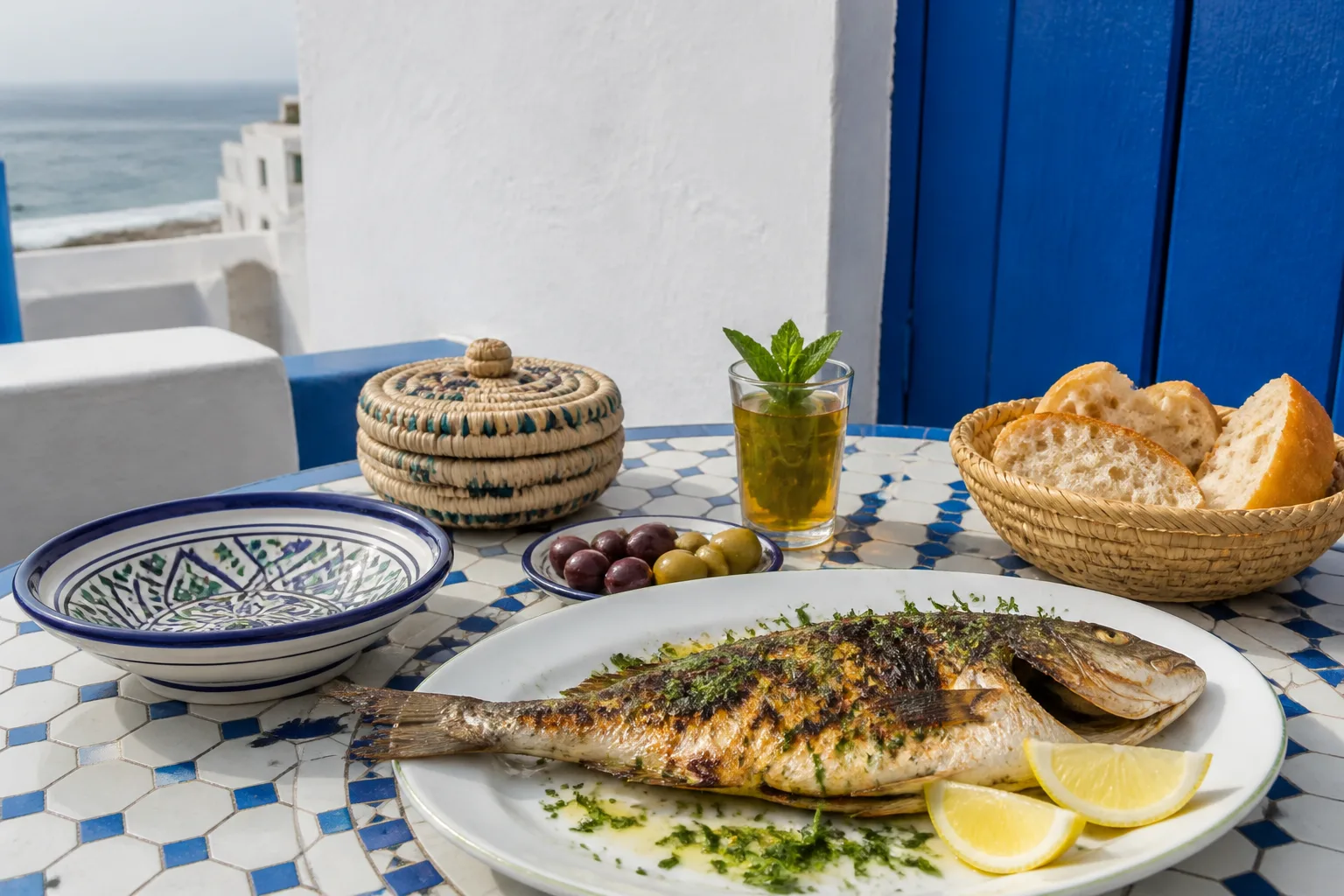
- Grilled fish: ask which fish arrived that day and whether the price is per plate or by weight.
- Fish tagine: allow more time for cooking and ask for a mild version if travelling with children.
- Sardines and calamari: good informal choices when fresh and cooked to order.
- Moroccan salads, bread and olives: easy dishes to share before the main course.
- Mint tea or fresh juice: a relaxed finish in a medina café or sea-view terrace.
Souvenirs and local products worth buying
Asilah's most characteristic souvenir is art. Small original paintings, prints and illustrated cards connect naturally with the town's mural and gallery culture. You will also see painted ceramics, woven palm baskets, textiles and simple leather goods. Buy a piece because you know who made it and what it is made from—not only because it matches the medina's blue-and-white palette.
- Small artworks: ask whether a painting or print is original, signed and safe to roll or pack.
- Ceramics: check rims and bases for cracks, then request careful wrapping for the road or flight.
- Woven baskets: lightweight, useful and easier to transport than fragile décor.
- Northern olive oil and honey: prefer sealed, labelled containers with producer and origin details.
- Spices and dried herbs: buy small quantities from a clean shop with regular turnover.
Rabat offers the strongest choice for carpets, silver jewellery and workshop-made pottery, while Asilah is better for compact art and coastal keepsakes. Bargain politely where prices are not fixed, but do not pressure an artist or cooperative to sell below the value of the work. Keep receipts for valuable pieces and avoid buying shells, coral or archaeological objects.
Choose the right itinerary
| Travel style | Suggested plan | Expected day |
|---|---|---|
| Direct transfer | Settat comfort stop, motorway lunch, Asilah check-in | 6–7 hours |
| Rabat culture | Udayas, lunch, one craft-shopping area, then Asilah | 8–10 hours |
| Nature route | Breakfast stop, Moulay Bousselham lagoon and seafood, Asilah | 8–9 hours |
| History route | Direct to Larache, Lixus visit, late lunch, Asilah | 8–9 hours |
Practical road advice
- Leave Marrakech early enough to reach Asilah before dark, especially if this is your first visit.
- Expect motorway tolls and keep some Moroccan dirhams available for small purchases.
- Confirm child seats, passenger count and luggage before choosing the vehicle.
- Use service areas for toilets and quick refreshments instead of unsafe roadside stops.
- In summer, reserve Asilah accommodation and restaurants early; the coast is popular with Moroccan holidaymakers.
- Check opening hours on the day for museums, archaeological sites and workshops.
Frequently asked questions
How far is Asilah from Marrakech?
The road journey is about 527 kilometres. A direct drive can take a little over five hours in light traffic, but six to seven hours is a safer transfer estimate with normal breaks.
Can Marrakech to Asilah be a day trip?
No. A same-day return would mean more than ten hours of driving before meals or visits. Stay at least one night; two nights give you a full day for the medina, beach or nearby coast.
Which stop is best if we only choose one?
Choose Rabat for architecture, history and craft shopping; Larache and Lixus for archaeology and seafood; or Moulay Bousselham for lagoon scenery. Rabat is the most complete first-time stop, but also the longest urban detour.
What food is Asilah known for?
Its Atlantic setting makes fresh fish and seafood the natural focus. Ask for the catch of the day, compare the price before ordering and pair it with Moroccan salads, bread and mint tea.
What should I buy in Asilah?
Small artworks, prints, painted ceramics and woven baskets make practical souvenirs. For edible products, choose sealed, labelled northern olive oil, honey, spices or herbs from a shop that can explain the origin.
A balanced one-day transfer plan
Leave Marrakech after an early breakfast, take a short comfort break near Settat and continue past Casablanca. Spend around two hours in Rabat for the Udayas and lunch, then drive north with one final service stop. Check in at Asilah before sunset, walk to the ramparts and save the medina galleries, beach and relaxed seafood meal for the following day.
